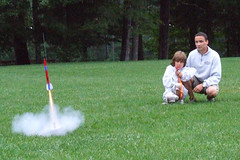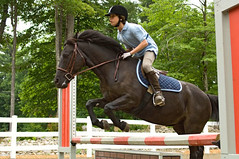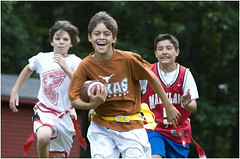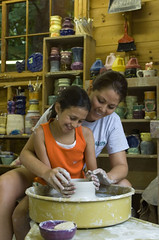

With the Center for Disease Control and Prevention (CDC) reporting that nearly 1 in 5 children between the ages of 6 and 19 is obese, it has become imperative that we, as parents, make as much effort to set our children up for success in establishing proper food habits, just as we would in other areas of their lives. Three primary causes consistently cited for childhood obesity are lack of physical activity, an unbalanced diet and overeating. An often overlooked benefit to summer camp is the significant impact it has in curbing childhood obesity by promoting an active lifestyle and healthy eating practices. In this multi-part series, we will examine the efforts being made by summer camps to battle poor diet and exercise.
Part I. Physical Activity
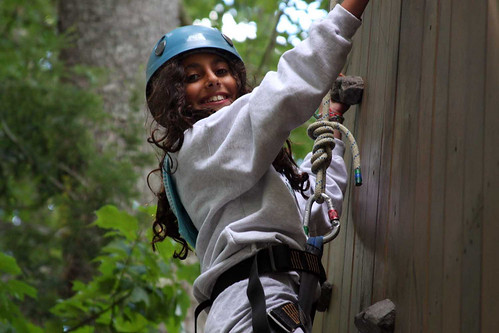
Beyond traditional summer camp sports such as soccer, basketball, baseball, roller hockey and
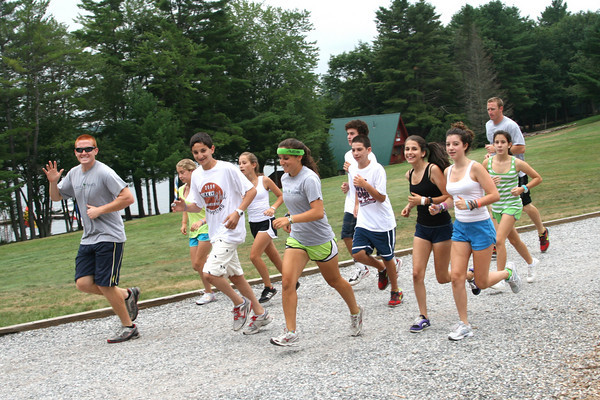
gymnastics, many camps are increasingly focusing on the development of extensive programs for such popular fitness activities as spin, running, weights, zumba, yoga and the martial arts. The instant popularity of these programs suggests that children have a natural interest in exercise and will engage in it of their own accord in the absence of many of the daily distractions that promote a more lethargic lifestyle but are not readily available at summer camp, such as computers, video game systems and television. The ability to participate in fitness programs as a form of fun also encourages campers to approach such activities with an open mind rather than as something forced on them and that is only done out of necessity.
Some camps are also experimenting with nutrition programs that marry cooking activities with fitness. Such programs teach campers how to plan healthy meals and snacks and then prepare them. Cooking programs are among the most popular at summer camp. To merge them with nutrition is a clever way to demonstrate the importance of using discretion in choosing what we eat and consuming it in moderation. In the past, the idea of “diet,” as in depriving oneself of necessary nutrients, has been cited as a contributing factor in the growth of eating disorders and yo-yo dieting.
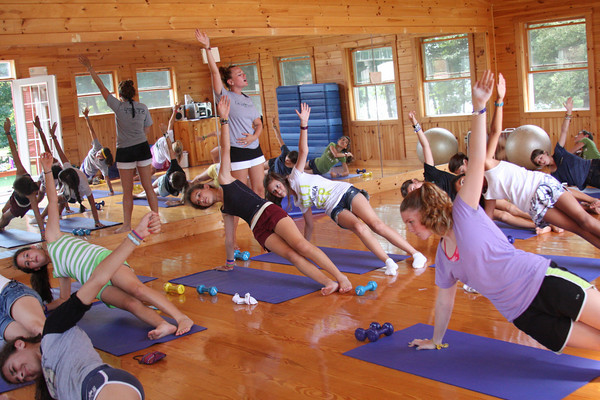
For those who question the lasting effects of fitness and nutritional habits adapted at summer camp, statistics indicate that they won’t be going away anytime soon. According to the American Camp Association, more than half of children who pursue a new interest at camp will continue pursuing that interest once they return home.
Up next, part II. An Unbalanced Diet
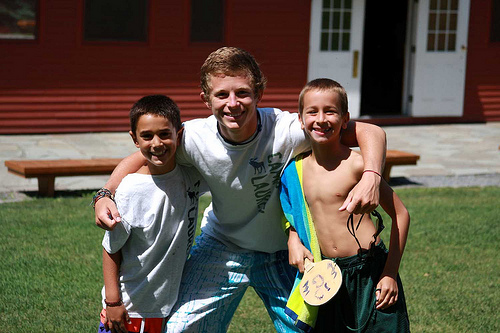
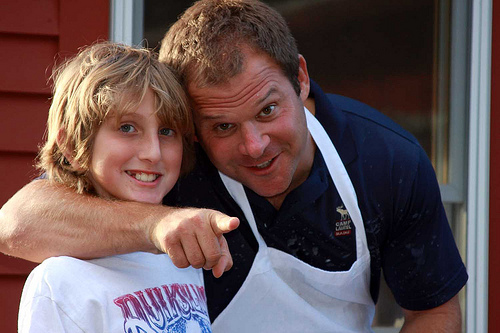
When I think about “camp songs,” I immediately think about singing around campfires, but each year at camp also has a distinct popular music soundtrack. Recently, campers weighed in on Twitter about the tunes that remind them of past summers and that got me thinking about what the United States and camp was like in the 1960s and 1970s.

Moving from one year towards the next has me thinking about summer camp in the past and future. For over a century, summer camps in the United States have helped millions of American children develop and grow as well as start negotiating their worlds outside of immediate families and neighborhoods. At first, a small number of elite camps only served boys, and primarily Protestant boys at that — but by the time the prosperous years after World War II were in full swing, approximately one in six American children went to camp, usually for eight weeks at a time. Throughout the 20th century, camps changed to serve all children including varying camp lengths, welcoming girls, and opening their gates to all races.
As summer camps have become more inclusive, the world that children experience both in the United States and globally has also become very different. Many children have access to a much broader world through travel, moving images, or other technologies, but some things just haven’t changed. For instance, our pre-college age identities are still informed by interactions with peers and people connected to our individual worlds, directly translating to the people we make direct contact with. While community is still central to human development, many of our daily communities are no longer bound by neighborhood blocks tied to local shared institutions and celebrations. Our families and extended social circles filter across state, nation and even electronic borders.
Past, present and future campers are all part of a lively and creative shared community where remembering a song, a person, an event, a skit, food or a poignant moment can instantly transport peers back to camp. So, what you would add to a time capsule to “capture” the timeless spirit of camp and why? We’d love to hear what alumni and present campers would include in an electronic time capsule, so get scanning or writing up those memories and lessons learned! If you’re not sure how to get started, ask questions in the comments below!


Whether your Holiday Season has ended or is about to begin, summer camp season isn’t far away! In fact, on December 8th 2010, next year’s campers wore their camp shirts in numerous cities to mark the 200 Day Countdown To Summer. If you’ve never gone to camp, it may be difficult to understand what drives this passion for camp all year—but campers know that camp is contagious, FUN, and essential! The camp experience helps children develop into well-rounded adults in enormous and complex ways, and that’s really important—but having FUN and intense youthful experiences is how it all happens. That’s the brilliant combination of camp. The experience includes serious AND hilarious moments—often simultaneously! The whole experience is much like the two sides of a single coin, or the double-faced image of Janus, the Roman god who can see into the past and future at the same time—and the origin of the name for the first month—January.
The serious side of camp includes feeling part of a unique community, identity development and participating through the years to make irreplaceable memories. If you don’t understand why camp is such an important American institution, in 1998 Ira Glass and the This American Life radio program attempted to investigate the topic—
It also highlights how fun, tradition, stories, community and being human are all part of identity development at camp. With his signature quirky style, Ira assembled more “truth is stranger than fiction tales,” where real campers tell stories of camp in days gone by and explain why the camp experience is so special. Hundreds of campers responded to his call for stories and the program shares a selection, so if you’re interested in history and interpreting American culture, you’ll find the reminiscences fascinating. Just remember that all camp experiences are not like the stories told—the point of the program is to illustrate the intensity of the experience! It ends with campers talking about becoming camp alumni and how their camp experiences won’t ever be forgotten.
As we all know, time passes and our camp years are limited by the fact that we’re only children once. It’s easy to feel briefly melancholy at year’s end as time waits for no one, but of course, December also means that the promise of a new year is around the corner! In January, we’d like to continue looking backwards and forwards while thinking about camp and we’d especially love to hear from camp alumni. What’s the funniest thing that happened to you at camp? How did camp contribute to your adult life? We’d like to hear about the memories you hold dear and close to your heart, or what you wish for campers next year? If you’re counting the days until camp starts, what are YOU planning?
According to American Camp Association
Here are some benefits you can expect from the job:
Kelly learned that “being a camp counselor is all about leading a group of people into enthusiasm,” and that continues to be important in her job today. Just as campers and staff still gather each summer—sometimes for the first time and sometimes after waiting all year just to come back—Kelly went to camp! There, learning, personal growth, fun and friendship blossomed during intense times and life-long skills and ideas were forged. Camp operates as a microcosm of experiences that mirror real-life situations as everyone negotiates friendships and different personalities, tries new things and finds their unique role in the group. If you’ve been a camper or a counselor, you know what I’m talking about. You also know that facilitating fun and teamwork takes creativity and enthusiasm. (If you’re thinking about being a counselor, camp is an incredible way to learn skills and prepare for future jobs!)
Once a young adult goes to college, no matter how much they miss home or home cooking, they are changed forever! One past camp counselor puts it this way, “After my first undergraduate winter break back home I decided I didn’t want to return home for three months during summer. College gave me independence/freedom from parental supervision, and I wanted to continue the experience through summer employment.”
While no actual human being develops in the precise
As children mature, they continue to develop and require more experiences where they can make independent choices without parents. If parents don’t allow children to make decisions and do things on their own, they won’t develop confidence or realize that they are not just extensions of their caregivers. It’s a tricky line that parents walk! Sometimes giving child
Of course, the