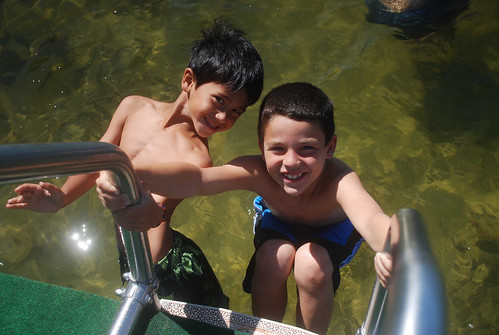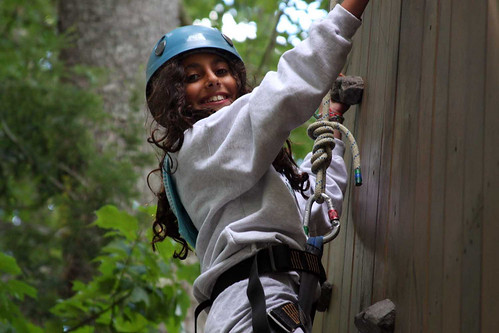

 Look at the horizon. What do you see? Camp!
The big day is near. Soon, your child leaves home for a summer of fun, excitement and growth.
Scary, isn’t it?
Sure. New experiences usually are. But we’ve got some ideas to help.
Talk with your child. And we mean “talk honestly.” It’s great to chirp about the wonderful days ahead. But be sure to acknowledge that fears and worries are okay. They’re normal. Let your son or daughter know that everyone – even you! – gets nervous before doing something different. Remind your child that directors, campus leaders, counselors and staff members know about nerves – and they’ll be there to talk, day or night.
 Don’t say, “And if you get homesick, you can come home!” Though reassuring, it sends the wrong message. It focuses on the negative – and undermines the idea that you’ve selected that camp because you trust the directors and counselors so much. Emphasize instead that while homesickness is normal, it goes away – and everyone at camp will help make it disappear. (It’s also a good idea to not say too much how much you’ll miss your child – or how badly everyone will feel that they’re not at the annual 4th of July fireworks or family reunion.)
 Prepare together. Read the packing list with your child. Go shopping with him or her. Your child will pick out items he or she really likes – while at the same time sharing a quiet, unhurried conversation about camp.
Reinforce camp policies on things like cell phones. You may want to give your child a phone to call home “just in case” — but that’s the wrong “call.” For one thing, it contradicts what you’re saying about the counselors’ and directors’ ability to help. For another, it encourages “bending the rules.” For a third, it shifts your child’s focus from having fun and making new friends, to sneaking off and being alone.
 Don’t let your own anxieties affect your child. As a parent, you may feel trepidation too. You’ll miss your child – and fear you’ll miss out on his or her growth. That’s natural. But don’t burden your kid with those thoughts. Tell your spouse and friends instead!
Camp is a time of independence. Of spreading wings. Of making new friends, forming strong bonds and creating vivid memories in a non-family, out-of-school environment. The days leading up to camp may be anxious – for campers and their parents. But the rewards will be well worth a week or two of very normal nerves.
We can’t wait to see your son or daughter at camp!!!