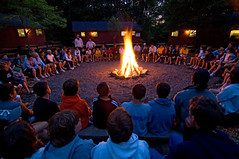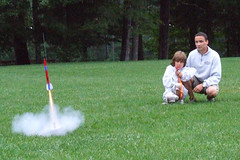

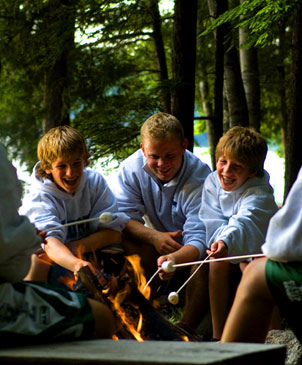
 One of the most endearing and sacred parts of summer camp is the campfire. More than just wood lit with a match, it’s an intimate part of the camping experience that goes far beyond simply sitting around a fire. Each camp has a set of traditions uniquely connected to the campfire experience and, to campers, each tradition is significant, demanding reverence. The campfire is the very place where many children recall the moment when their camp transformed from “a camp” to “their camp”, where fellow campers and counselors become family while singing songs, roasting s’mores, and engaging in campfire activities. So intricate is the campfire to the summer camp experience that even former Disney CEO Michael Eisner has reflected on its importance in making him who he is:
“Simply consider the lessons I was taught by the campfire…every time the rich reward was the same as we simply sat and enjoyed our consuming creation. And, there was one aspect in particular that never failed to intrigue me, and that was the process of seeing the single small flame of the match spread to the kindling and then the twigs and then the smaller branches and finally the larger logs. It didn’t dawn on me until years later, but this was the perfect metaphor for the creative process…Years later, I found myself running a network television division and then a movie studio and now an entire entertainment company. But, much of the success I’ve achieved can be traced to the direct and metaphorical lessons I learned in building those campfires.”
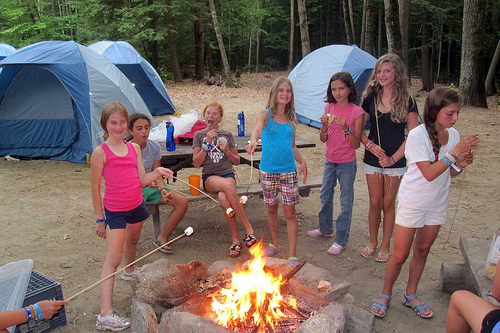 To some, to assign such significance to fire may seem a bit of a stretch. But to anyone who has attended camp, it’s not only believable but apt. Beyond Eisner’s metaphor, the campfire is symbolic of camp, and represents the bonding between campers and nature. Campfires instantly evoke feelings of togetherness and promote an atmosphere of being together in an intimate setting that is unique to the people who are present. Many camps hold opening and closing campfires to welcome campers and immerse them in the camping experience and to help them say goodbye at the end of the summer. At the beginning of the summer, the flames represent the birth of a new summer. Opening campfires often include some sort of ritual that introduces an idea or process that can be re-visited throughout the summer, such as setting goals for the summer or some sort of introduction and bonding activity with camp “siblings”. The meaning of the flames, however, transforms at the end of the summer. The burning of a closing campfire represents the end of the season. It’s a way to give the summer a proper and respectful send off. Campfires held throughout the summer supplement overnight camping trips and special events.
To say that the campfire breeds creativity is not only accurate, but understated. The various representations and meanings that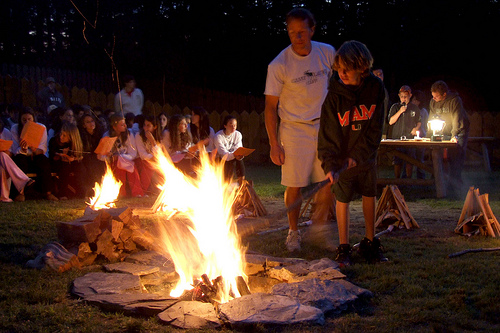 the actual fire itself takes on helps campers learn to look at the same thing from different angles, a crucial aspect of honing creative thought and learning to think “outside the box”, which is essential to developing good problem solving skills. When considered from this perspective, it’s not at all difficult to imagine a CEO of one of the world’s largest companies crediting much of his success to his camp experiences, specifically to the campfire. In fact, it provides insight about the significance of camp and how the lessons learned there can be carried throughout life.